
Welcome! Unlock Your First Offer Here
Welcome! Unlock Your First Offer Here
Welcome! Unlock Your First Offer Here
China's top anti-drone jammer manufacturer

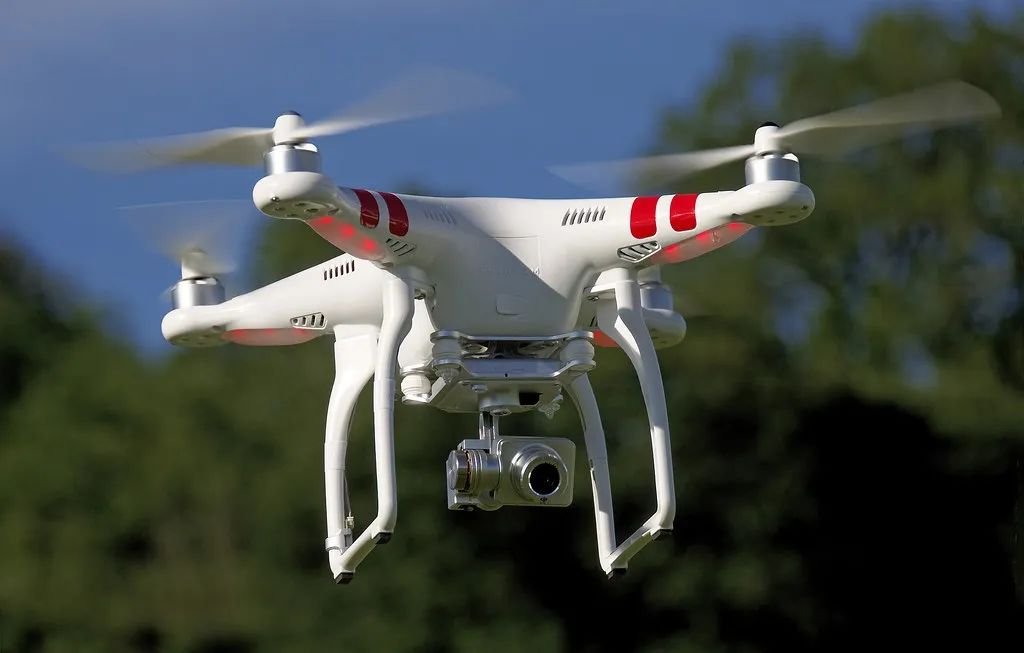
Drones pose an ongoing security threat, but which is more dangerous: silent spoofing or aggressive jamming? We break down their core differences to help you protect your assets.
Drone spoofing hijacks navigation via fake GPS data, while jamming disrupts control signals. Each carries unique risks and demands tailored defenses. Unsure which to prioritize? Read on to clarify the true threats to your operations.
While these threats seem complex, their core mechanics are distinct. Here’s a simplified breakdown:
Drone jamming overwhelms communication channels with noise, forcing the drone to land or return home. Spoofing broadcasts fake GPS signals to trick the drone into following unauthorized paths.

Jamming is a direct, aggressive tactic—like shouting over a conversation. Anti-drone jammers broadcast powerful radio signals on the drone’s control frequencies (2.4 GHz/5.8 GHz), drowning out operator commands. When the drone loses its link, it activates fail-safe mode: landing immediately or returning to its launch point. The effect is instant, with the goal of neutralizing control.
Spoofing is stealthy and deceptive—equivalent to giving false directions. Instead of noise, a spoofer sends counterfeit (but stronger) GPS signals that the drone’s receiver prioritizes over legitimate satellite data. The drone unknowingly follows false coordinates, allowing attackers to redirect it or seize full control for capture or weaponization.
| Feature | Drone Jamming | Drone Spoofing |
|---|---|---|
| Mechanism | Overwhelms with RF noise | Broadcasts fake, stronger GPS signals |
| Primary Target | Control/communication links | GPS navigation systems |
| Attacker’s Goal | Disrupt/disable the drone | Take precise control |
| Drone Reaction | Fail-safe landing/return | Follows false coordinates |
| Detection | Easy (loud signal) | Difficult (mimics legitimate signals) |
Securing airspace requires identifying threats early—but some attacks are designed to stay hidden. Here’s how detection differs:
Jamming emits a powerful, noisy RF signal, making it easy to locate. Spoofing mimics legitimate GPS signals, rendering it a stealthy, hard-to-identify threat.

Jammers are highly detectable—like a lighthouse in RF spectrum. Advanced detection systems use RF sensors to scan for unusual energy bursts. When activated, jammers reveal their location via directional signals, allowing triangulation in seconds. Attackers expose themselves the moment they turn on the device.
Spoofing is ghost-like: it generates signals identical to legitimate GPS (but slightly stronger). RF sensors see no obvious red flags—detection requires cross-referencing the drone’s reported GPS location with independent tracking (e.g., radar). This demands expensive, complex sensor fusion, making spoofing far harder to spot.
| Characteristic | Jamming Detection | Spoofing Detection |
|---|---|---|
| Signal Signature | Loud, high-energy | Quiet, GPS-mimicking |
| Primary Alert | RF energy spike | Navigation data discrepancy |
| Attacker Location | Easy to triangulate | Near-impossible to pinpoint |
| Required Tech | Basic RF analysis | Sensor fusion + signal integrity checks |
Power plants, airports, and other critical sites face catastrophic risks—but one attack type is far more destructive:
Jamming can cause random drone crashes, risking accidental damage. Spoofing enables precise targeting, turning drones into guided weapons for deliberate, high-impact attacks.
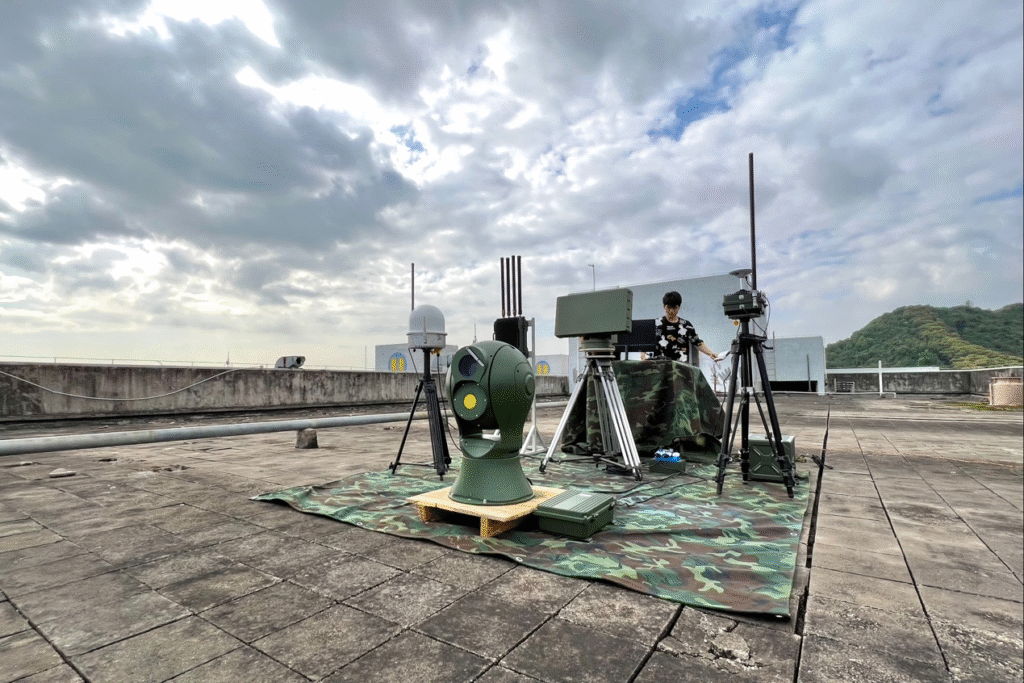
Jamming unauthorized drones stops surveillance but creates a new risk: uncontrolled 20kg objects falling from the sky. Damage to transformers or sensitive equipment is possible but random, localized, and rarely part of a coordinated attack.
Spoofing allows attackers to guide drones with centimeter-level precision. They can target main transformers, control panels, or multiple critical points simultaneously—causing cascading failures, blackouts, or catastrophic damage. This is deliberate, targeted, and far more devastating.
| Factor | Impact of Jamming | Impact of Spoofing |
|---|---|---|
| Attacker’s Intent | Disable the drone | Weaponize the drone |
| Damage Type | Random, localized | Precise, systemic |
| Threat Level | Moderate (physical hazard) | Severe (coordinated attack) |
| Psychological Effect | Concern | Terror of unstoppable strikes |
Modern warfare relies on drones and precision navigation—but one threat undermines operational integrity at scale:
Jamming offers tactical advantages by disabling enemy drones/communications. Spoofing delivers strategic chaos by corrupting GPS-dependent systems across entire battlefields.
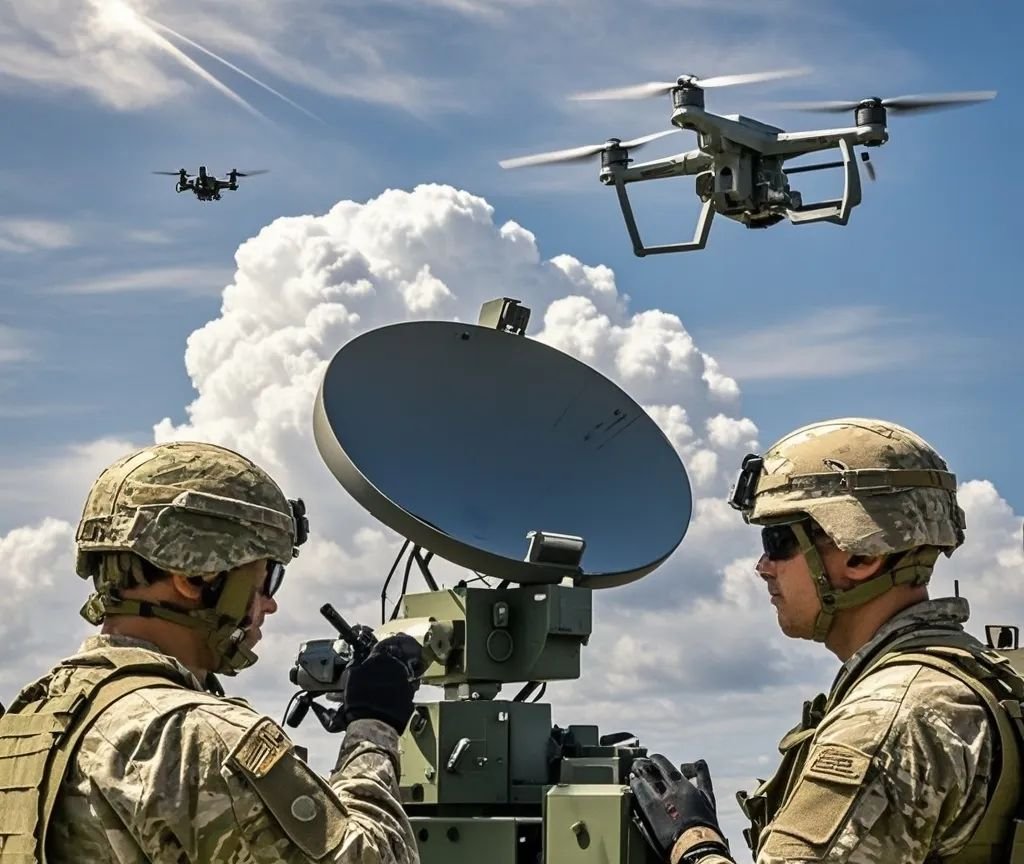
Jamming creates protective bubbles around troops, convoys, and bases. It blinds enemy reconnaissance drones and disrupts command/control—providing a short-range, immediate tactical edge. It solves localized problems to win specific fights.
Spoofing targets the foundation of network-centric warfare: reliable location data. Broadcasting spoofed signals over a battlespace corrupts GPS-guided drones, artillery, and troop navigation. Friendly forces are led into ambushes, missiles miss targets, and chaos propagates across the entire force.
| Impact Area | Jamming’s Effect | Spoofing’s Effect |
|---|---|---|
| Scope | Tactical (specific targets) | Strategic (entire operational area) |
| Primary Target | Enemy drones/communications | Friendly GPS integrity |
| Consequence | Unit-level mission delay | Widespread confusion + friendly fire risk |
| Defensive Challenge | Deploy directional jammers | Adopt non-GPS navigation (e.g., INS) |
Spoofing is a more insidious, strategic threat, while jamming remains an immediate kinetic danger. Both require robust, layered defense to protect critical assets, military operations, and airspace security.












 Русский
  العربية
  Français
  Español
  Português